
When the Mirror Tells a Different Story
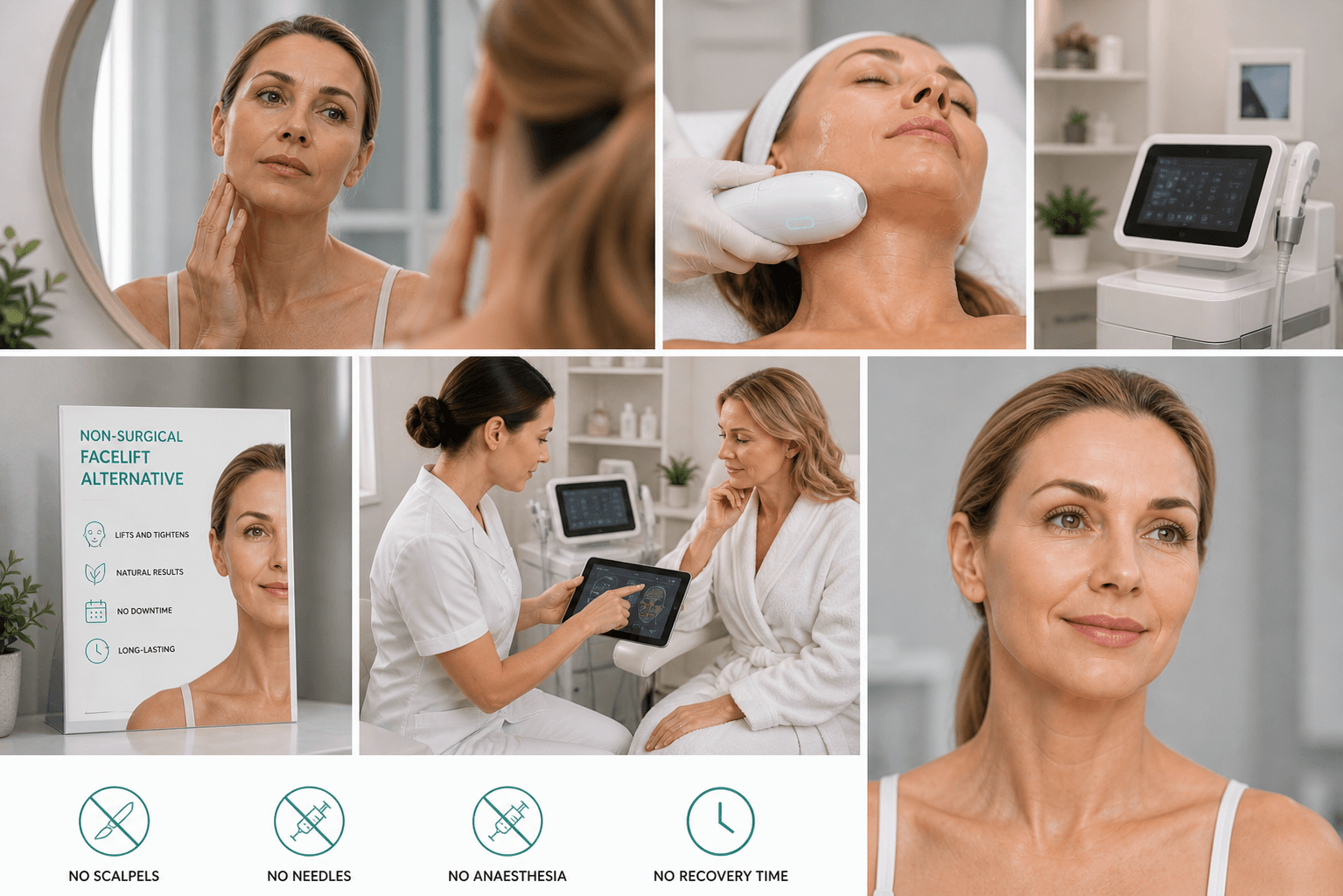
Eventually, the reflection looking back at you no longer quite matches how you feel inside. Maybe it crept up slowly. The jawline softened. The neck lost a little of its firmness. Lines found their way into areas they had never reached before. Nothing dramatic, just enough to notice. Enough to put you on the edge of wondering whether anything can be done about it without going near a surgical procedure.
This is where HIFU treatment comes in.
HIFU stands for High-Intensity Focused Ultrasound. It lifts, tightens and firms the skin on your face and neck without any cutting at all. The energy penetrates to the deeper layers of skin tissue, addressing collagen at a cellular level and activating your body's natural healing response. The result is progressively tighter, smoother, more elastic skin that continues to improve for months and lasts well beyond a single year.
No scalpels. No needles. No anaesthesia. No recovery time. You walk in, have the treatment done, and continue with your day. It is precisely that simplicity which has led to HIFU treatment becoming one of the most popular non-surgical facelift alternatives — and its popularity continues to grow year on year.
Pretty much everything you need to know is here on this page. How it works, what areas it treats, who it suits best, what to expect during a session and, most importantly, how long the results last. If you have been curious about HIFU treatment but were unsure where to begin, you are in the right place.
Understanding HIFU Treatment
The technology behind HIFU was originally developed for medical purposes, including the treatment of certain tumours, before being adapted for cosmetic use. In its aesthetic application, HIFU delivers ultrasound beams at precise depths beneath the skin. These beams create controlled thermal coagulation points — small, targeted spots of heat that trigger the body's natural wound-healing process.
Here is why that matters. When those thermal spots form deep within the tissue, your body responds by generating fresh collagen. Collagen is the structural protein responsible for keeping skin firm, plump and resilient. As we age, collagen production gradually declines. By the mid-thirties, the effects of that decline are already becoming visible. Skin begins to sag. Lines become more defined. The overall texture and quality of the skin changes.
In essence, HIFU treatment re-engages a process your body used to carry out naturally and more efficiently when it was younger.
One of the features that truly sets HIFU apart from surface-level treatments is the depth at which it works. The majority of non-surgical skincare treatments operate on the surface layers — the epidermis or upper dermis. HIFU goes considerably deeper. It can reach down to the SMAS layer, which stands for the superficial muscular aponeurotic system. This is the very same layer that surgeons adjust during a traditional facelift. The ability to target this layer without any surgery is precisely what gives HIFU treatment its genuine lifting potential, rather than providing only superficial improvements.
The ultrasound energy passes through the outer skin without damaging it. No cutting, no burning, nothing to disrupt the surface at all. Everything happens beneath. This is the true meaning of a non-invasive treatment, and it is the reason why HIFU requires no visible recovery time whatsoever.
Treating the Face with HIFU
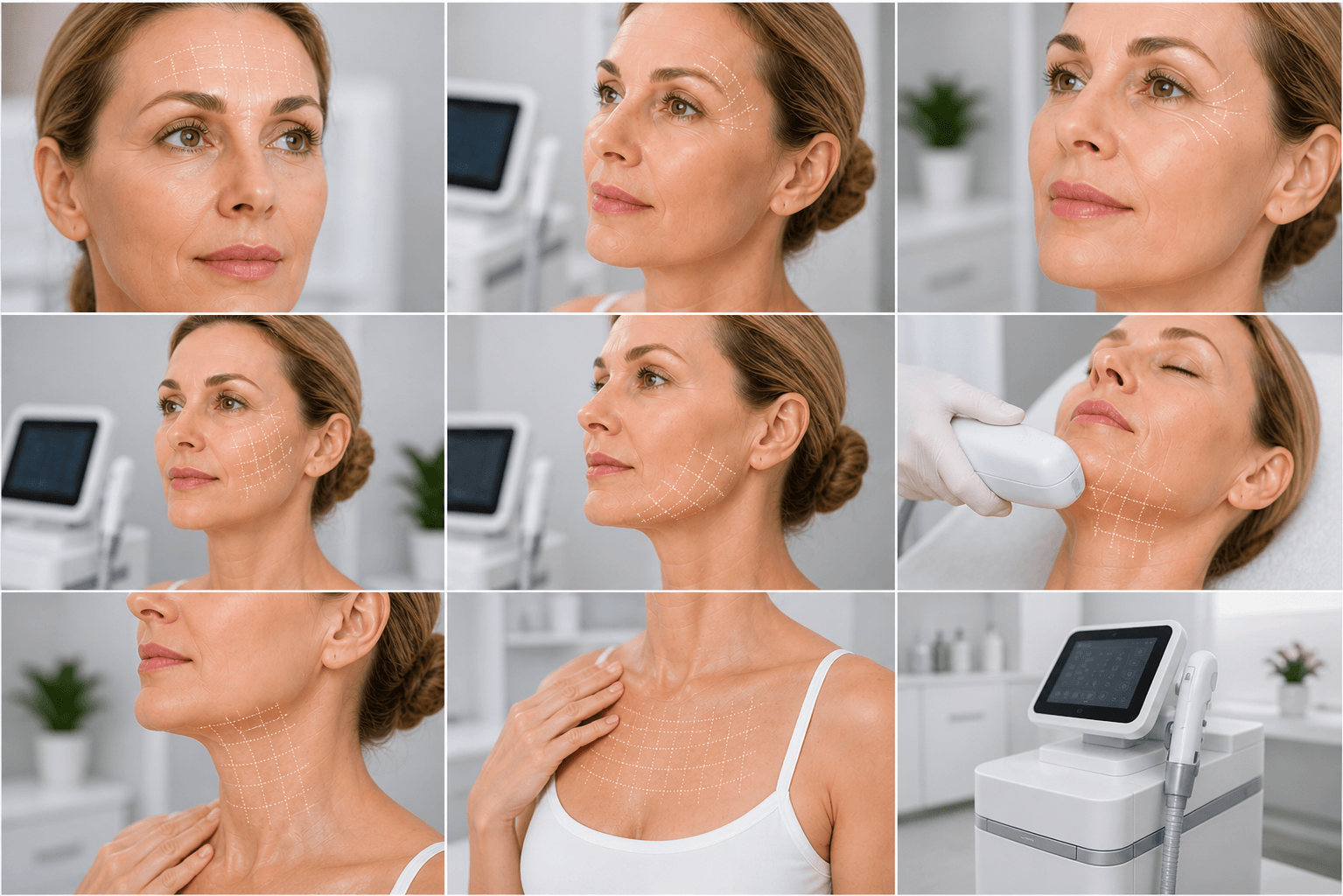
HIFU treatment produces some of its most rewarding results in the areas where people first begin to notice the signs of ageing — on the face. Because the technology can be precisely directed to specific zones, the entire face does not need to be treated at once. Treatment can be focused wherever it is needed most.
Forehead and Frown Lines
The horizontal lines across the forehead and the vertical creases between the brows are often among the earliest signs of ageing to appear. HIFU targets the tissue beneath these lines, tightening the underlying structure so that the skin above becomes smoother. The effect is subtle but genuinely noticeable. Lines soften, and the forehead appears lighter and more open.
Eyebrow Lifting
Even after a full night of sleep, a drooping brow can make the entire face look tired. HIFU tightens the tissue above and around the eye area, creating a subtle, natural-looking lift. The area around the eyes appears more open and refreshed without the overly tightened appearance that can sometimes result from more aggressive approaches.
Crow's Feet
Those fine lines that fan out from the outer corners of the eyes are notoriously resistant to topical treatments. Creams rarely reach them in any meaningful way. HIFU can treat the precise tissue in this very delicate area, reducing the depth and visibility of crow's feet. The skin around the eyes tightens gradually, creating a fresher and more rested appearance.
Cheeks
Volume loss in the cheeks is one of the most significant contributors to facial ageing. When the cheeks flatten or droop, the entire face can appear older and drawn. HIFU treatment firms the cheek tissue, helping to restore some of that natural contour. It does not add volume like dermal fillers, but it tightens and lifts what is already present in a beautifully natural way.
Jawline and Jowls
The gradual loss of definition along the jawline is one of the most commonly reported concerns. Sagging skin and tissue along the lower face leads to the development of jowls. HIFU tightens the deep tissue along and under the jaw, restoring definition and relieving the heaviness that jowls create. This is widely regarded as one of the most rewarding areas to treat.
Double Chin
A double chin is not always about carrying extra weight. It can be a matter of structure and skin laxity. HIFU treatment addresses the loose skin and deeper tissue beneath the chin, while simultaneously encouraging the breakdown of fat cells in the submental area. The result is a cleaner, more defined chin and neck profile.
Neck
The neck is often one of the first areas to show signs of ageing. The skin here is thinner, more delicate and loses elasticity sooner. HIFU works on the deeper layers of neck tissue to firm and lift the area. Horizontal neck lines, crepey texture and general looseness all respond well to treatment. The neck becomes smoother and blends more naturally into the jawline above.
Décolletage
The skin across the upper chest is often overlooked in daily routines, even though it typically ages just as visibly as the face. Sun exposure, collagen loss and gravity all take their toll. HIFU treatment firms and tightens the skin across the décolletage, softening lines and addressing crepiness. It is a popular addition to facial treatments for a more complete rejuvenation.
HIFU Treatment for the Body
Although the focus is often on the face, HIFU treatment can be applied to various areas of the body with equal effectiveness. The same fundamental principles apply. Focused ultrasound energy reaches the deeper layers of tissue, stimulating collagen production to tighten and lift the skin. On the body, HIFU can also target and break down localised fat cells, offering mild body contouring alongside skin tightening.
Upper Arms
Loose skin on the upper arms is a concern that many people encounter with age. HIFU tightens the skin in this area, improving tone and firmness. The arms appear more defined and less soft, addressing changes brought about by ageing or fluctuations in weight.
Stomach and Abdomen
The abdomen is consistently one of the most popular body treatment areas. HIFU reduces lax skin across the stomach and can simultaneously address localised fat deposits. While it will not replicate the results of major weight loss, for moderate skin laxity and stubborn pockets of fat, it offers a genuinely worthwhile improvement.
Thighs
Over time, the skin in the thigh area loses its firmness as collagen and elastin fibres weaken. HIFU utilises focused ultrasound energy to tighten the skin and disrupt fat cells in targeted areas. The result is thighs that appear smoother, firmer and better contoured.
Back
When diet and exercise are not sufficient to address excess skin and fat on the upper and lower back, HIFU treatment can help. It tightens the skin and improves the overall smoothness of the back, creating a more toned appearance that makes a noticeable difference in how clothing fits and how confident you feel wearing it.
Buttocks
HIFU works effectively on the buttocks, where drooping and looseness can develop over time. Ultrasound energy encourages collagen production in the deeper tissue, resulting in lifted and tighter skin without the need for invasive procedures.
Hips and Love Handles
Stubborn fat around the hips is one of the most common aesthetic complaints for both men and women. HIFU can target these areas to reduce fat and tighten the overlying skin, creating a smoother and more defined contour.
Vaginal Tightening
HIFU technology is also used in vaginal tightening procedures, addressing laxity that can develop after childbirth or with age. The treatment uses the same focused ultrasound energy to stimulate collagen production in the tissue, resulting in improved tone, sensation and overall comfort. It is a non-surgical alternative that avoids the risks and recovery time associated with surgical options.
How It Works Beneath the Surface
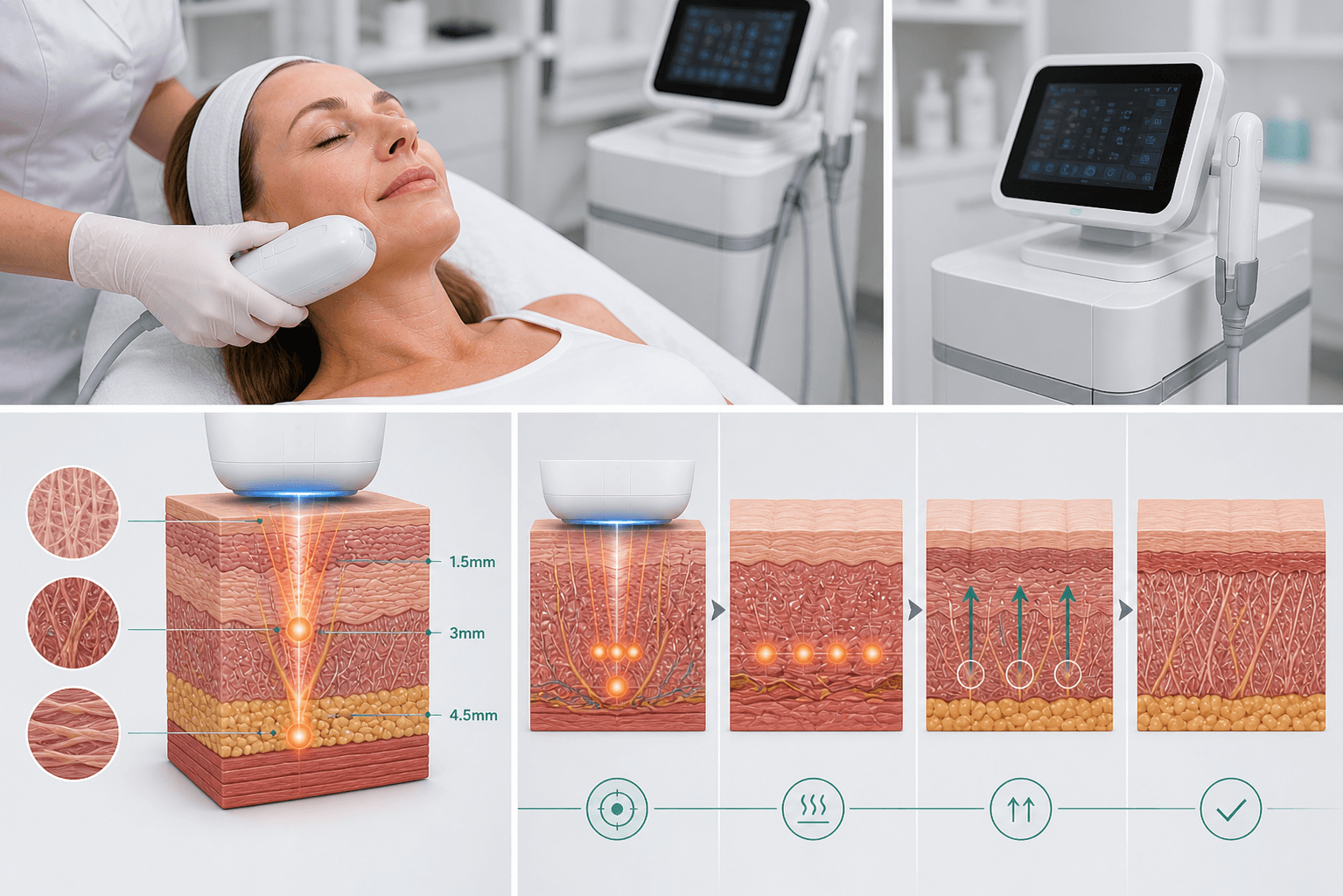
Understanding what actually happens during treatment helps explain why the results are so effective. The science behind HIFU is straightforward and genuinely interesting.
The device is placed on the skin and transmits micro-focused beams of ultrasound to very specific layers of tissue. The energy can be delivered at depths of 1.5mm, 3mm or 4.5mm below the surface, depending on the area and the concern being addressed. Each depth corresponds to a different layer of tissue.
At 1.5mm, the energy reaches the upper dermis. This depth is ideal for fine lines and superficial skin tightening. At 3mm, it penetrates the deeper dermis, where more extensive collagen remodelling takes place. At 4.5mm, the energy reaches the SMAS layer — the fibrous tissue between the facial muscles and the skin above. This is the same layer that a surgeon adjusts during a facelift. HIFU achieves a similar tightening effect without any incision at all.
At each targeted depth, the ultrasound energy creates thermal coagulation points. These are microscopic areas where the tissue is heated to approximately 60 to 70 degrees Celsius. This causes an immediate contraction of existing collagen fibres, producing a subtle instant tightening effect. More importantly, it activates the body's natural healing response. The body recognises the micro-injury and begins producing new, healthier collagen in the weeks and months that follow.
This is precisely why HIFU treatment results are progressive. You may notice an incremental improvement immediately after your session, but the most significant changes develop over the following one to six months as your body generates new collagen. The skin continues to tighten, lift and firm throughout this entire period. The process is gradual, but it is entirely natural. Nothing artificial. Nothing injected. Simply your body responding to a carefully controlled stimulus.
The treatment is remarkably precise. Ultrasound energy concentrates at the intended depth while the skin surface remains completely unharmed. There is no warmth on the outside, no peeling and in most cases not even a trace that any treatment has taken place. Everything occurs underneath, and the surface remains entirely undisturbed.
The Genuine Benefits of HIFU Treatment
The advantages of HIFU extend well beyond basic skin tightening. They address many of the most common concerns that create hesitation around cosmetic procedures in the first place.
The primary benefit is that HIFU is entirely non-surgical. There are no cuts, no needles, no injections and no anaesthesia required. For those who are uncomfortable with the thought of surgery, or simply prefer to avoid the associated risks, HIFU presents a genuine alternative that delivers visible, real-world results.
Downtime is essentially non-existent. You could have an HIFU session during a lunch break and return to work immediately afterwards. There is nothing to heal from. No bruising, no swelling, no bandages. Your day continues without interruption.
The results look natural because they are natural. HIFU stimulates your body's own collagen production. The improvements develop gradually as your body renews its structural support. There is no sudden, dramatic transformation that signals something has been done. Instead, there is a steady, incremental improvement that people around you may notice without being able to identify exactly what has changed. You appear fresher, more rested, more like yourself on a good day.
HIFU treatment is suitable for all skin types and tones. Because it uses ultrasound rather than light energy, it does not carry the risks that some laser treatments pose for darker skin. There is no risk of pigmentation changes regardless of your skin type.
A single HIFU treatment session typically lasts for approximately twelve to eighteen months. Some people report benefits lasting considerably longer, depending on their skin quality and the rate at which their body naturally produces collagen. Many choose to have a maintenance session once a year to sustain their results over the longer term.
HIFU also combines well with other cosmetic procedures. It works beautifully alongside chemical peels, microneedling, LED therapy and topical skincare protocols. With HIFU addressing the deeper structural layers and other treatments targeting the surface, combining approaches allows for comprehensive, full-depth results.
Safety is another significant advantage. HIFU technology has a long history of use in the medical field. It has been studied and clinically validated for cosmetic use, and the procedure holds FDA recognition as a non-invasive skin lifting treatment. Adverse reactions are uncommon and generally limited to mild redness or slight tenderness in the treated area, both of which resolve within a few hours.
It is also worth noting the convenience of a single session. A treatment plan with HIFU most commonly involves just one appointment to achieve the desired outcome. Unlike treatments that require multiple visits over several weeks, HIFU is a single-session procedure. You have it done, and then your body does the rest in the months that follow.
How HIFU Compares to Other Treatments

With so many cosmetic treatments available today, it helps to understand where HIFU sits in relation to the alternatives. The best choice depends on your goals, how much downtime you can accommodate and how deep the treatment needs to work.
Surgical Facelift
A surgical facelift remains the most comprehensive option for skin lifting and tightening. Surgery physically repositions and removes skin, and the results can remain stable for five to ten years or more. However, surgery involves general anaesthesia, weeks of recovery, visible scarring and genuine medical risks including infection and nerve damage. HIFU does not deliver the longevity of surgical results, but it provides meaningful lifting and tightening with none of the corresponding risks or downtime. For most people with mild to moderate laxity, HIFU provides more than enough improvement to make surgery unnecessary.
Ultherapy
Ultherapy is another treatment often mentioned alongside HIFU and is also based on ultrasound technology. They share the same underlying principles but differ in their application. Ultherapy features a real-time imaging system that allows practitioners to visualise the tissue layers during treatment, which can lead to greater precision. However, Ultherapy sessions tend to be significantly more expensive, and for most people the results are broadly equivalent. HIFU treatment offers a more accessible option while still delivering excellent skin tightening and lifting.
Chemical Peels
Chemical peels work on the surface of the skin. They exfoliate damaged outer layers to reveal fresher, better-textured skin beneath. Peels are excellent for improving texture and pigmentation, but they do not reach the deeper tissue where structural ageing occurs. HIFU and chemical peels are actually highly compatible. A peel addresses surface quality while HIFU provides deep tightening and lifting. Combining the two can produce results greater than either achieves on its own.
Laser Treatments
Laser treatments offer wide versatility for resurfacing, scar treatment, pigmentation correction and surface collagen stimulation. However, some laser treatments involve downtime and carry a risk of pigmentation changes, particularly for darker skin tones. Because HIFU uses ultrasound rather than light energy, these concerns do not apply. HIFU also works at deeper layers than most lasers can reach, making it ideal for anyone whose primary goal is lifting and structural improvement rather than surface refinement.
Who Benefits Most from HIFU Treatment
One of the reasons HIFU treatment has become so widely popular is the breadth of its suitability. It is not limited to a particular age range or skin type. That said, certain groups tend to see the most significant benefits.
Late Twenties and Early Thirties
HIFU can be used as a preventative measure from the late twenties onwards. By the age of twenty-five, collagen production is already beginning to slow, even though the visible effects of ageing may not yet be apparent. Using HIFU during these earlier years triggers the collagen regeneration process and helps delay noticeable sagging and lines. It is about getting ahead of the changes rather than trying to reverse them after they have already taken hold.
Forties and Fifties
For those in their forties and beyond, HIFU becomes more of an active intervention. At this stage, most people have noticed changes in definition, droopiness around the jawline, deeper lines on the forehead and around the eyes, and some degree of neck laxity. HIFU addresses all of these concerns in a single session and provides a non-surgical method to turn back the clock. This is the age group where results are often most visibly striking, because there is still enough elasticity in the skin for the tightening effect to be genuinely noticeable.
Over Sixty
HIFU treatment remains effective for those over sixty, though realistic expectations are important. Skin that has been loosening for decades will not respond in the same way as skin that is just beginning to droop. That said, HIFU still delivers a meaningful lift, improved contour and firmer-looking skin. It is particularly valuable for individuals who have had previous surgical procedures and want to maintain those results without undergoing further surgery.
Equally Effective for Men
HIFU treatment works equally well for men. Male skin is thicker and ages differently, but the ultrasound energy penetrates effectively regardless of thickness. Men are increasingly turning to HIFU to reduce neck laxity, define the jawline and address forehead lines. The complete discretion of the treatment is a particular draw — there are no visible signs, no downtime and no need for explanation.
The ideal candidate for HIFU treatment has mild to moderate skin laxity. Where significant excess skin or advanced sagging is present, surgery may be more appropriate. The treatment works best when the skin still retains some structural integrity, providing a solid foundation for the collagen stimulation to build upon.
Previous cosmetic surgery patients are also excellent candidates. The enhancement effects of a facelift gradually fade as the skin continues to age, but HIFU can extend those results by supporting ongoing collagen production and helping to maintain firmness. It works as a companion to surgical procedures, removing the need for repeat surgery.
What to Expect During a Session
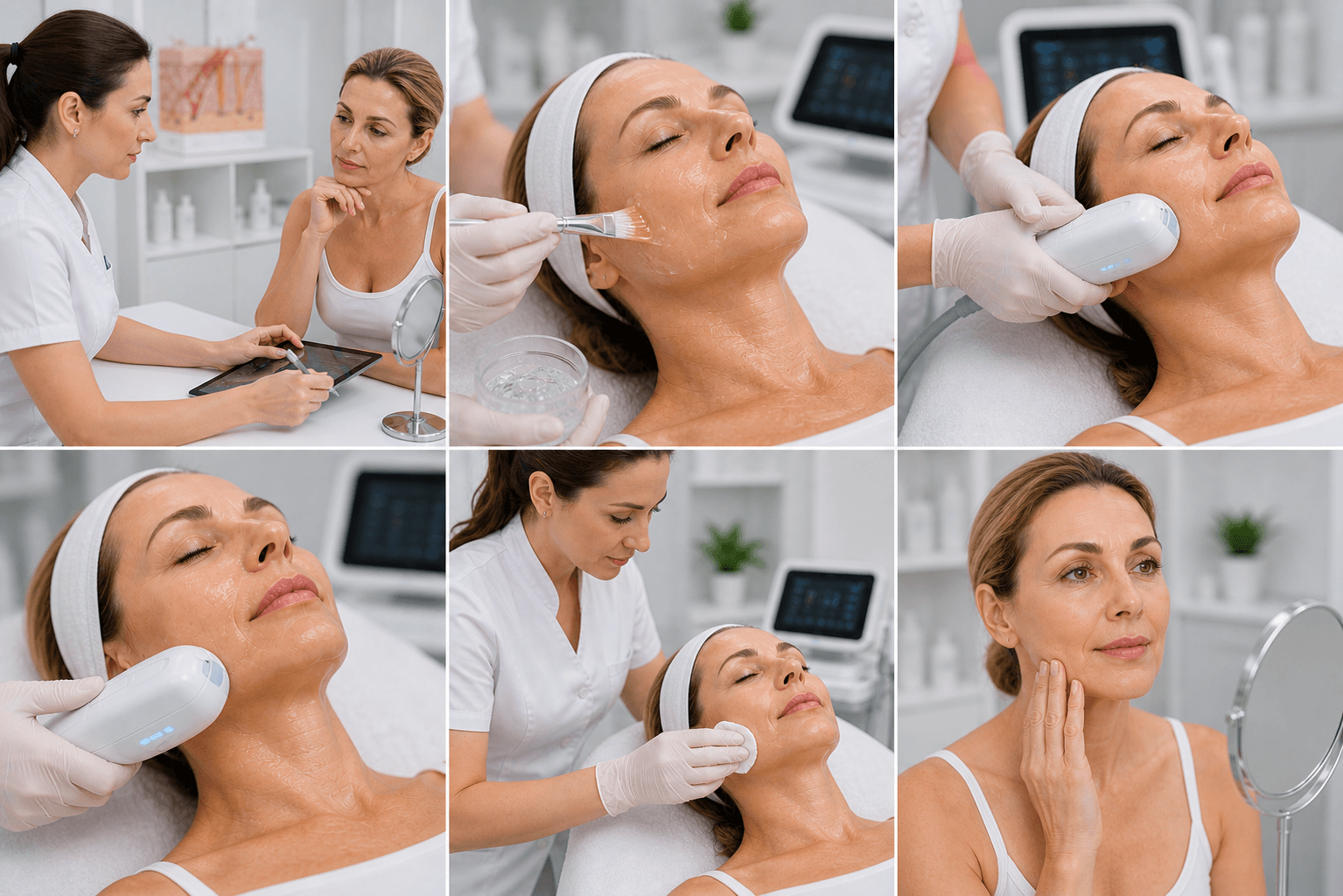
Knowing what happens during a session can make the whole experience far more comfortable. The HIFU treatment process is quick and uncomplicated, and most people are pleasantly surprised by how much simpler it is than they expected.
The Consultation
Every session begins with a consultation. A practitioner examines your skin, discusses your concerns and goals, and determines which areas to treat and at what depth. This step is important because every face and body is different. Your treatment plan will be tailored specifically to you.
Preparation
Once the plan is agreed, the skin is cleansed and a layer of ultrasound gel is applied to the treatment area. This gel helps the HIFU device make proper contact with the skin and assists in transferring the ultrasound energy efficiently.
The Treatment
The practitioner uses a handheld device, moving it slowly over the treatment area and delivering short bursts of focused ultrasound energy to the selected depths. You may feel a warm or hot sensation as the energy is delivered, along with occasional tingling or slight prickling. The sensation varies between areas. The jawline and forehead tend to be the most comfortable, while areas closer to bone, such as the temples or brow ridge, may produce a more intense feeling. It is entirely manageable, and the sensation stops immediately once the device moves on.
Duration
A full-face session typically takes between 60 and 90 minutes. Treatments for smaller areas, such as the chin or neck alone, can be completed in 30 to 45 minutes. Body treatments vary depending on the size of the area being addressed.
Afterwards
Once the session is complete, the gel is wiped away and that is it. There are no bandages, no cooling packs and no special aftercare instructions. Your skin may appear slightly pink for an hour or so, but this settles quickly. You can apply makeup, go outside, exercise or carry on with whatever you would normally do.
Results and What Follows
Calling it a recovery period is almost misleading because there is genuinely nothing to recover from. There are no scars, no stitches and no areas that need time to heal. You leave the session looking much the same as when you arrived, perhaps with a warm glow or slight pinkness that disappears within a couple of hours.
Many people notice a gentle, immediate lifting effect straight after the treatment. This happens because of the contraction of existing collagen fibres in response to the heat. It is subtle, but it is an encouraging preview of the results to come.
The real changes develop progressively. Within the first one to four weeks, you may start to feel the skin becoming firmer. Lines begin to soften. Texture improves. Between months two and three, the improvements become most noticeable as collagen production accelerates. By months three to six, the full effect of the treatment has generally run its course. The skin feels significantly tighter, contours are more defined and the overall appearance is noticeably fresher and more lifted.
These results typically persist for twelve to eighteen months. For many people, they last even longer. This is partly influenced by lifestyle factors. Good nutrition, hydration and conscientious skin health practices all contribute to how well the benefits are maintained. Smoking and excessive sun exposure accelerate collagen breakdown, which can shorten the duration of results.
There are no restrictions on activities following treatment. You can go to the gym, swim, visit saunas, use your regular skincare products and continue with daily life without any adjustments. Normal sun protection is always recommended, though the treatment works beneath the surface and is not compromised by sunlight.
Most people choose to have a follow-up HIFU treatment once a year to maintain and further build upon their results. Because each session contributes to a continual cycle of collagen renewal, the benefits can genuinely accumulate over time with regular maintenance.
Safety and Reassurance
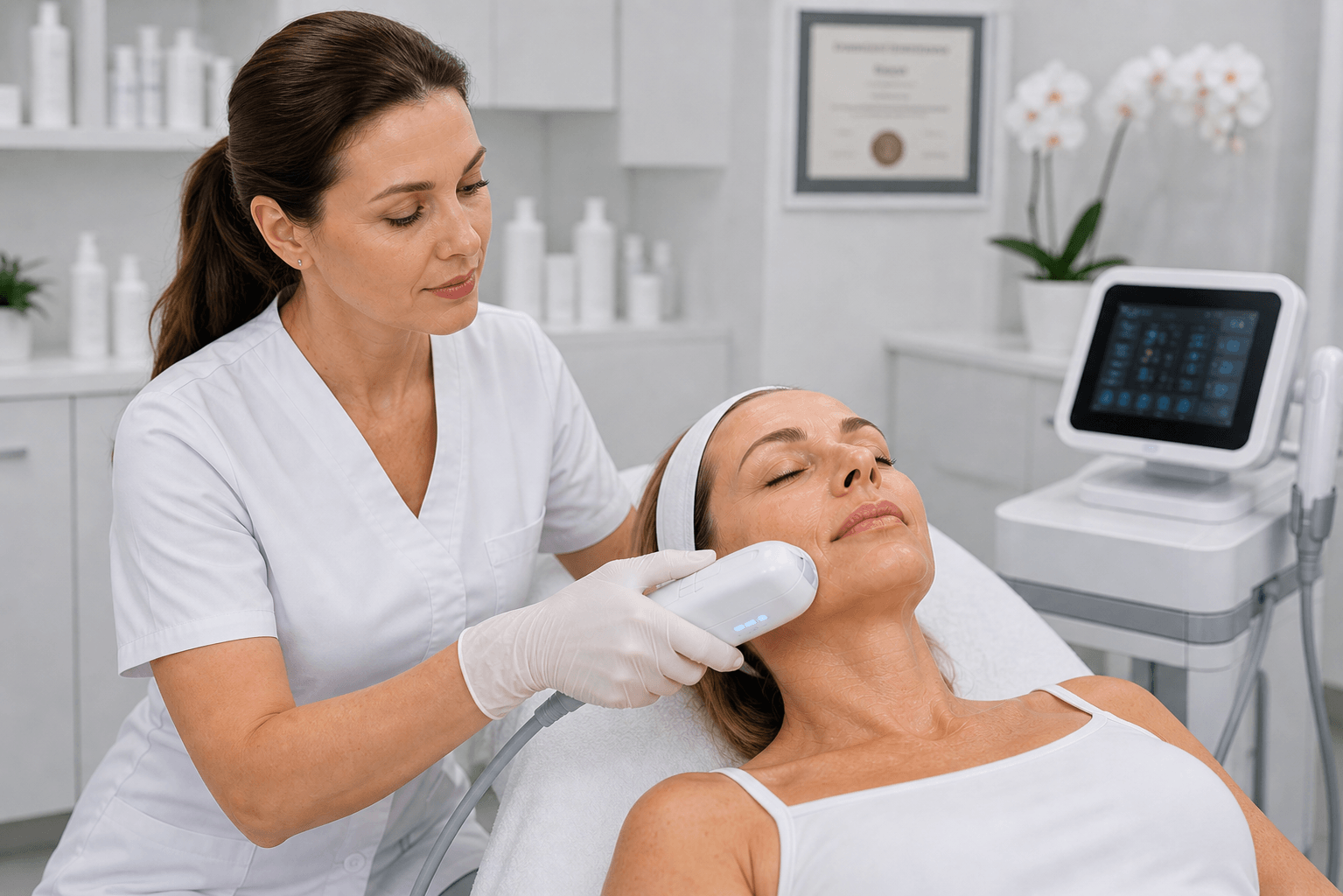
One of the first questions anyone asks about a cosmetic procedure is whether it is safe. HIFU treatment has an excellent safety profile that provides real confidence.
The technology has been used in medical settings for over fifty years. It has been rigorously studied and tested for clinical use in cosmetic applications. HIFU holds FDA recognition for non-invasive skin lifting, which adds a further layer of assurance.
Because the treatment is completely non-invasive, the risks associated with surgery simply do not apply. There is no possibility of infection from incisions, no scarring, no reaction to anaesthesia and virtually no prospect of nerve damage. While the ultrasound energy penetrates to the desired depth beneath the surface, the outermost layer of skin remains entirely intact.
Most side effects are mild and resolve quickly. Slight redness in the treated area may occur and usually disappears within one to two hours. Tenderness or sensitivity is possible and generally lasts no more than a day. Mild tingling is occasionally reported but is self-limiting. Bruising is extremely uncommon.
The single most important factor in a safe HIFU treatment is having it performed by trained and experienced practitioners who understand both the technology and the anatomy of the face and body. Proper device settings, appropriate energy levels and accurate depth targeting all influence both the safety and the effectiveness of the treatment. In skilled hands, HIFU is one of the safest cosmetic procedures available.
Common Questions About HIFU Treatment
Most people describe the sensation during HIFU treatment as warm and prickly, with moments of mild intensity. It is not uncomfortable to a degree that most would describe as painful. The feeling varies by area. Where there are bones closer to the surface, such as along the forehead or jawline edge, the sensation may feel sharper, while fleshier areas such as the cheeks tend to be much more comfortable. The sensation occurs only during the pulse delivery and stops the moment the device moves on. No anaesthesia is required and the treatment is well tolerated by the vast majority of people.
Most people achieve excellent results after a single treatment session. The collagen stimulation that occurs following one treatment is usually sufficient to produce visible tightening and lifting over the subsequent months. Those with more significant laxity may benefit from a second session after six to twelve months, but this is not the norm. Annual maintenance sessions are commonly chosen to sustain results over the longer term, but they are entirely optional rather than essential.
Absolutely. HIFU treatment is an excellent companion to other non-invasive therapies. Because it works on the deeper tissue layers, it naturally complements treatments that target the surface. Chemical peels, microneedling, LED light therapy and high-quality topical skincare routines all operate at different depths within the skin. When HIFU is combined with these approaches, it bridges the gap between deep structural improvement and surface-level texture and tone enhancement.
None at all. You can resume all of your normal activities immediately after the session. There are no wounds to heal, no swelling to wait out and no restrictions on what you can do. Most people return to work or carry on with their day without making any adjustments whatsoever. The zero-downtime nature of the treatment is one of its most significant advantages over surgical alternatives.
Results typically last between twelve and eighteen months, though this varies from person to person. Your skin quality, current age, lifestyle, sun exposure and overall health all influence how long the benefits endure. Some people report that improvements last well beyond eighteen months, particularly if they maintain a good skincare routine and minimise excessive sun exposure. Annual maintenance treatments can help sustain and build upon results over time.
There is no single ideal age. HIFU treatment serves a purpose at every stage of life. In the late twenties and thirties, it works as a preventative measure, helping to slow down visible ageing before it gains a foothold. In the forties and fifties, it becomes an active treatment for established laxity and lines. From the sixties onwards, it helps maintain firmness and lift. The consistent theme is that HIFU offers something of genuine value at every point in the ageing process.
Side effects are uncommon and generally quite mild. The most frequent is slight redness in the treated area, which typically resolves within one to two hours. Some people experience gentle tenderness or warmth that lasts no more than a day. In rare cases, temporary tingling or numbness may occur but resolves within a few days. Bruising is extremely uncommon. With appropriately trained practitioners and correct settings, serious complications are virtually unheard of.
Very much so. HIFU is increasingly popular with men. Men experience the same concerns it addresses, including jawline definition loss, neck sagging, forehead lines and general skin laxity. Male skin tends to be thicker, but the ultrasound energy penetrates effectively regardless. One of the most appealing aspects for men is the complete discretion. There are no signs of treatment, no downtime and no need for any explanation. You have the session and carry on as normal.
Yes, though it is important to set reasonable expectations. HIFU treatment tightens loose skin on the body and can also disrupt localised fat cells in common trouble spots such as the abdomen, hips, thighs and upper arms. It is well suited to mild and moderate contouring needs and can also be used to address skin laxity following weight loss or pregnancy. However, it will not replicate the effects of surgical fat removal procedures. For refining and defining specific areas, it is a genuinely effective non-surgical treatment.
Both technologies use heat to stimulate collagen, but they work through different mechanisms and reach different depths. Radiofrequency primarily influences the dermis, delivering diffused energy across a broader area of tissue. HIFU, by contrast, delivers concentrated energy to very specific focal points and can penetrate all the way through to the SMAS layer — a depth that radiofrequency cannot reach. It is this deeper reach that gives HIFU its distinctive lifting power. Radiofrequency can be excellent for skin tightening and smoothing, particularly for superficial improvement, and the two technologies actually complement each other very well when used together.
Looking Good, Naturally
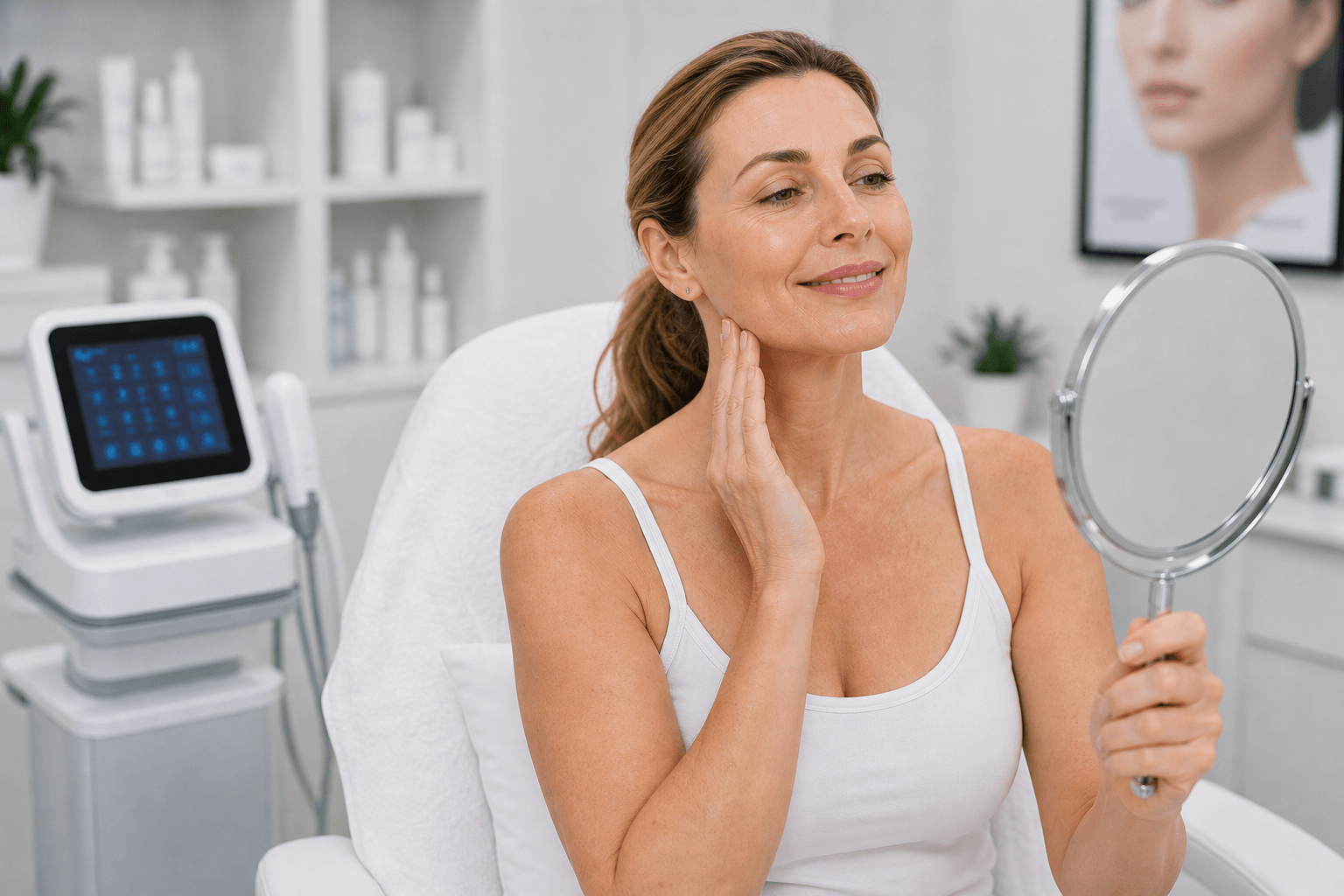
The fundamental appeal of HIFU treatment is beautifully simple. It works with your body, not against it. Nothing foreign is injected. No tissue is cut away. No artificial alterations are imposed. The treatment simply creates the conditions for your own biology to do what it does naturally — only more effectively and more reliably than it manages on its own as time passes.
People often find this alignment with natural processes deeply satisfying in the results it produces. You do not look like you have had work done. You look like you — only a version of yourself that is more rested, firmer and fresher. The kind of version that has people telling you that you look well, without being able to pinpoint exactly why.
HIFU treatment has secured its place as one of the most trusted non-surgical aesthetic treatments available today. The science is robust, the safety record is excellent and the results speak for themselves in the experiences of thousands of satisfied individuals.
Whatever your age — whether you are in your thirties and wanting to stay ahead of the visible signs of ageing, in your forties or fifties and looking to address what has already changed, or beyond sixty and seeking to maintain and refresh your appearance — there is a HIFU treatment that will be genuinely beneficial. It works, it is safe, it respects your time and the results feel completely and naturally yours.
Your skin has always been working for you. HIFU treatment is simply returning the favour.